The Culling Game (死滅回游, Shimetsu Kaiyū) is one of the most structurally significant arcs in Jujutsu Kaisen. After the Shibuya Incident, Kenjaku sets up a large-scale ritual that transforms Japan into a closed playground, divided into colonies (barriers), with rules and a point system that forces participants to fight each other.
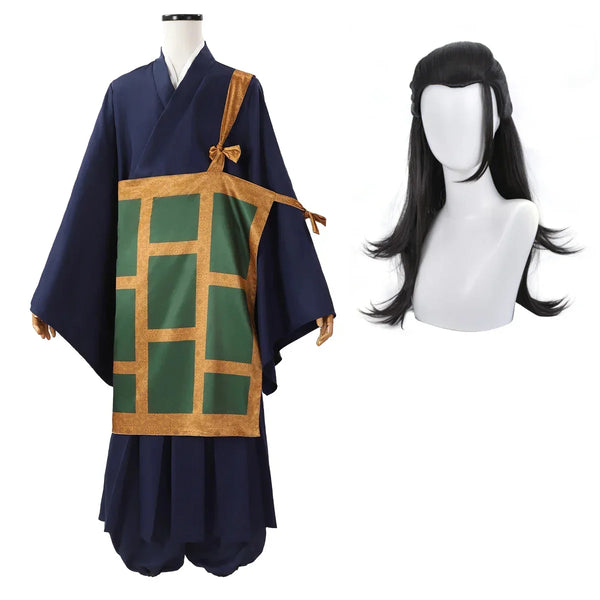
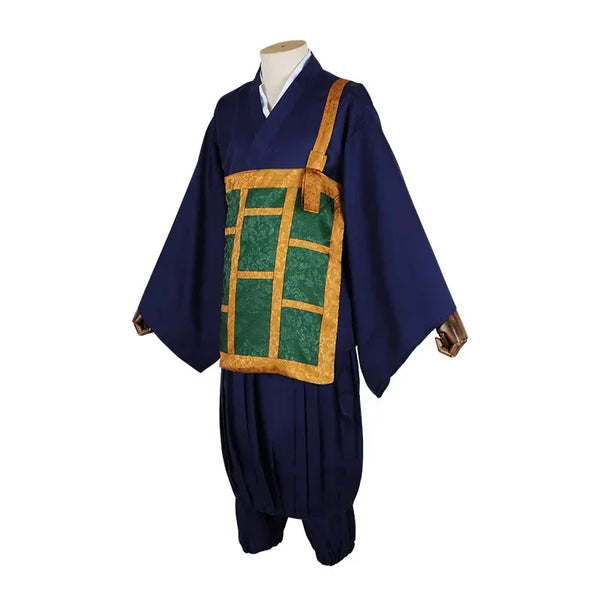
If you want to prepare a cosplay related to this arc (uniforms, more civilian pieces, accessories), the simplest approach is to start with a clean base from manga cosplay, then add layers and details via manga clothing and some finishing touches from cosplay jewelry.
To follow news and articles related to releases and arcs, you can also check out the manga blog. And to return to the shop: Bakashop.
What the Culling Game is

The Culling Game is presented as a deadly game framed by strict rules, where thousands of people capable of using cursed energy are forced to participate. The territory is divided into 10 colonies spread across Japan, each enclosed by a barrier. An interface familiar, Kogane, serves as an intermediary for registration, score consultation, and rule enforcement.
The indicated period for the event spans from November 1st to December 24th, 2018, and the arc covers chapters 143 to 268 in the manga (according to the most common arc markers in fan bases and summaries).
Kenjaku's Objective and Tengen's Role

At the heart of the scheme, Kenjaku pursues a simple-to-state and difficult-to-stop idea: forcing humanity's evolution by provoking a country-wide change. In the arc's explanations, this involves preparing a fusion linked to Tengen and accumulating cursed energy produced by the clashes in the colonies.
Why the Colonies Change Everything
The colonies are not just "combat zones." They create a legal and technical framework: they enclose, impose registration, transform entrants into players, and make the Culling Game difficult to stop even if the organizer falls. This is one of the reasons why the characters quickly seek to modify the rules rather than "breaking" the system head-on.
The Rules of the Culling Game

The system is based on initial rules (registration deadline, penalties, points per elimination, penalized score stagnation), and then on rules added by players who have reached a point threshold. This mechanic is central because it explains:
- why characters must act quickly (deadlines, penalties, score to maintain);
- why the "game" becomes a strategic lever (adding rules for 100 points);
- how the Culling Game can be directed without being stopped.
The Point System
Points are earned by eliminating other players. Their value varies depending on the target's profile (sorcerer, non-sorcerer, cursed spirit counted as a player). From 100 points acquired (excluding "base" value), a player can propose a new rule. The program accepts, unless the rule visibly and permanently disrupts the course of the game.
Added Rules That Change the Dynamic
Among the most important additions cited in arc summaries:
- consultation of other players' data (name, points, colony, additions);
- voluntary point transfer between players;
- possibilities for entering and exiting colonies according to system developments;
- locking registrations on a given date, increasing pressure.
Progression: Useful Markers Without Getting Lost

The Culling Game is dense, but it can be read as a succession of blocks: entering the colonies, searching for key players capable of adding rules, major confrontations, then escalating to broader stakes than simple scores.
Tokyo: Yuji, Megumi, and Higuruma
In Tokyo, one of the strong axes is the encounter with Hiromi Higuruma, a participant who has crossed the 100-point threshold, making him a player capable of influencing the rules. The arc shows how a confrontation can turn into a negotiation, and why the question "how to modify the system" becomes as important as "how to win."
Sendai: Yuta and the Escalation of Confrontations
Sendai is often cited as an area where confrontations quickly become more violent and complex, with several forces present. Yuta Okkotsu engages in a series of battles there that serve both as a demonstration of his level and as a piece of the global puzzle (points, rules, priorities, civilian survival).
Kashimo and the Logic of "Score to Govern"
Hajime Kashimo perfectly illustrates the idea that, in this game, accumulating points is not just about dominating a duel: it's about changing the rules, thus influencing the entire ritual. This is a key point to understand why the Culling Game is not just a series of fights.
Cosplay: How to Get the Culling Game Arc Right
If you want a consistent "Culling Game" look, the idea is to stay true to the silhouettes and codes of the arc: functional clothing, simple layering, limited but visible accessories. To start, you can browse manga cosplay to find a base (uniform or complete outfit), then adjust according to your character.
- Uniform option: clean base + finishing touches and adjustments via manga clothing.
- Accessory option: light details (rings, discreet pieces, costume elements) in cosplay jewelry.
- Ambiance option: if you're setting up a photo corner or a filming set, you can complete it with manga decoration.
To spot news related to current trends (shop additions, stock returns, new references), keep an eye on manga new arrivals.
Why This Arc is Central in Jujutsu Kaisen
The Culling Game serves as a narrative pivot: it redistributes forces, introduces a framework of rules that influences every decision, and sets the stage for stakes that go beyond the colonies. It also highlights a recurring theme of the series: combat is not just a matter of power, but of conditions, constraints, and mechanics.
Culling Game FAQ
-
Culling Game, which arc is it in Jujutsu Kaisen?
It's the arc called Shimetsu Kaiyū, generally presented as the direct continuation of the Shibuya Incident, organized by Kenjaku and structured into colonies. -
How many colonies are there in the Culling Game?
Arc summaries indicate 10 colonies spread across Japan, each corresponding to a barrier where the game takes place. -
What are points for in the Culling Game?
Points reward eliminations and allow, from 100 points, to propose adding a rule, which changes the dynamic of the ritual. -
Who is Kogane in the Culling Game?
Kogane is the interface linked to the game system, used for registration, displaying scores, and communicating rules. -
Where can I find a Jujutsu Kaisen outfit for cosplay?
For a complete base, start with manga cosplay, then supplement as needed with manga clothing and cosplay jewelry.
For other manga articles, you can return to the manga blog, or go back to Bakashop.
On the shop side, you will find costumes, wigs and goodies in the Jujutsu Kaisen collection.